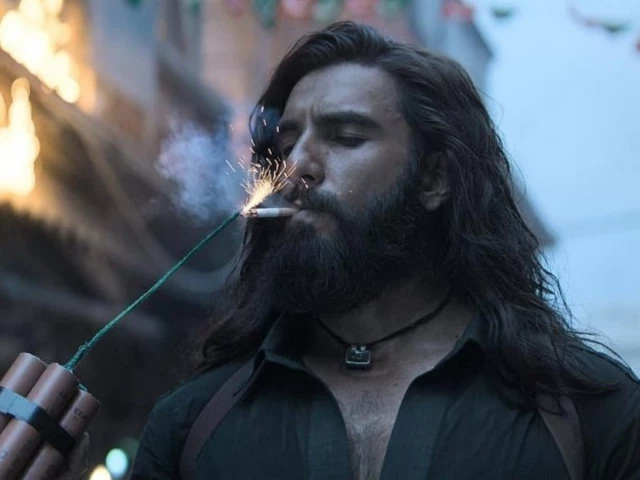
The recent Dhurandhar movie release in India starring Rehman Dekait from Lyari Pakistan has taken audiences by storm since its release on December 5, 2025. This Indian spy thriller, loosely inspired by the Lyari gang wars, has quickly gained attention not only for its action-packed sequences but also for its strong political undertones.
What sets Dhurandhar apart is that the divide among audiences is not strictly national. Both Indian and Pakistani viewers have expressed mixed reactions, often splitting opinions within their own countries. While some appreciate its cinematic qualities, others have criticized it for being propaganda-heavy, highlighting how storytelling can be manipulated for political narratives.
Rehman Dekait, portrayed by Akshay Khanna, anchors the story with intensity, bringing the Lyari gangster-inspired character to life. The film successfully merges spy thriller elements with local cultural references, creating a cinematic experience that has sparked both admiration and debate.
Pakistan’s Mixed Reactions
Pakistani audiences quickly recognized Dhurandhar as a propaganda film, yet reactions went beyond simple critique. Many expressed disappointment at the lack of Pakistani-produced narratives addressing real-life events from their own communities.
Content creator Bilal Hassan (@mystapaki) shared his conflicted feelings: “The film is very well-made. The action sequences are fantastic, Akshay Khanna’s acting is incredible, and the songs are really good. I wanted to be upset, but I couldn’t.”
Hassan pointed out the anti-Pakistan dialogues and political messaging, describing them as evolved propaganda. Yet the real sting was cultural ownership. He emphasized personal connections: “I grew up seeing the Lyari gang wars. Chaudhry Aslam’s house was in front of my school. When a bomb went off on top of his house, our school windows broke. That’s how close to home this story was for me.”
This sentiment resonated with many Pakistanis online, who expressed frustration that local filmmakers rarely tell stories rooted in their own communities, leaving it to Bollywood to dramatize these narratives.
Cultural Representation and Baloch Visibility
Despite the propaganda elements, Dhurandhar introduced aspects of Baloch culture rarely portrayed in Pakistani media. A Baloch dance sequence, authentic costumes, and careful depiction of local traditions gave the film cultural depth, showing that Bollywood can represent regional stories with nuance—even if through a political lens.
Journalist Javera Siddique noted that the film gave Baloch culture visibility that Pakistani TV dramas seldom provide, elevating it beyond stereotypical portrayals. This inclusion of cultural elements sparked conversations about the importance of authentic storytelling and representation in cinema.
However, the film also drew political controversies. Sindh government spokesperson Sumeta Afzal Syed condemned the use of former Prime Minister Benazir Bhutto’s images alongside PPP rallies, calling it a misleading attempt to portray the party as sympathetic to terrorists. Critics argued that these portrayals, while controversial, reflected some real-world connections, highlighting the blurred line between fact and fiction.
Indian Audience Perspectives
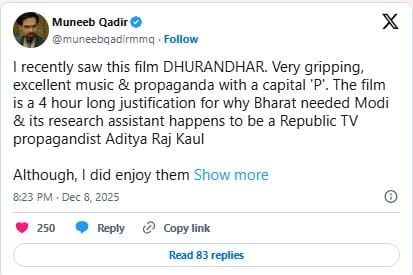
Indian audiences were quick to detect propaganda, and opinions were similarly divided. While some praised Dhurandhar for its action, production design, and music, others criticized its nationalistic and anti-Pakistan messaging.
Journalist Arfa Khanum Sherwani described the film as “heavy-handed in political messaging,” accusing the director of incorporating Sangh propaganda into the narrative. Film critic Anupama Chopra also called the movie “exhausting,” citing excessive testosterone, shrill nationalism, and inflammatory content.
Nevertheless, elements like the entry song “Sher-E-Baloch”, originally called “FA9LA” and performed by Bahraini rapper Hussam Aseem (Flipperachi), captured attention for its energy and cinematic flair. Fans praised the performances while remaining critical of the messaging, indicating a more discerning viewership that separates entertainment from propaganda.
Propaganda in Modern Bollywood
Dhurandhar exemplifies the ongoing trend of propaganda-infused Bollywood films. Critics argue that while action, music, and production values are excellent, such films blur the line between storytelling and political messaging.
Many Indian viewers cautioned against accepting these narratives uncritically, highlighting the potential long-term cultural impact. A recurring concern is that when propaganda is packaged as a spy thriller with catchy music, audiences may overlook the political implications, normalizing bias in cinematic storytelling.
Spotlight on Rehman Dekait’s Character
Akshay Khanna’s portrayal of Rehman Dekait is central to the film’s narrative. His performance balances charisma, menace, and emotional depth, making him a memorable protagonist. Critics from both countries acknowledged the authenticity he brought to the role, even amid debates about the film’s political messaging.
Supporting performances, including Sanjay Dutt as Chaudhry Aslam, further elevated the film. Dutt’s portrayal of the legendary anti-gang figure was praised for nuance and credibility, giving audiences moments of emotional connection amid high-octane action sequences.
Audience Discussions on Social Media

Social media has amplified discussions around Dhurandhar, creating a cross-border dialogue. Pakistani audiences expressed frustration over foreign narratives telling local stories, while some Indian viewers debated the political messaging and potential bias.
Content creator Bilal Hassan and other social media personalities highlighted ownership and authenticity as key issues, pointing out that these stories could have been told domestically in Pakistan with deeper insight and less dramatization.
Many users noted the irony of embracing Indian content despite frequent bans and erasure of Pakistani artists in Bollywood. This tension underscores the complex dynamics of cultural exchange in the region.
International Reception
Although Dhurandhar faced regional bans in several Gulf countries, its global footprint is notable. Streaming platforms, social media, and international news coverage have made the film accessible to viewers worldwide.
The film’s success highlights a growing global appetite for South Asian stories, even if presented through Bollywood’s lens. International audiences appreciated the high production value, action sequences, and musical elements, though some also critiqued the political undertones.
Lessons on Storytelling and Ownership
Dhurandhar sparks broader reflection on storytelling and cultural ownership. Many Pakistani viewers lamented that local filmmakers rarely address critical historical and social events, leaving such narratives to foreign filmmakers who may introduce bias or jingoism.
Bilal Hassan summarized this perspective: “We won’t tell this story ourselves because politicians would be implicated. Seeing it through Bollywood’s eyes is bittersweet.”
This discussion raises ethical questions for filmmakers globally: how to balance entertainment, authenticity, and political context when representing real-life events and communities.
Wrap Up!
The recent Dhurandhar movie released in India on Rehman Dekait from Lyari Pakistan is more than just a spy thriller. It has become a cultural touchpoint, sparking conversations on propaganda, authenticity, and cross-border storytelling.
The film’s strong performances, technical excellence, and cultural representation have drawn global attention, while its political messaging has prompted critical reflection. Both Indian and Pakistani audiences have engaged in a nuanced debate, acknowledging artistry while questioning narrative ownership.
Ultimately, Dhurandhar highlights the power of cinema to entertain, inform, and provoke discussion, and reminds viewers worldwide that storytelling carries responsibility alongside spectacle.